Long distance life
How to Survive Long Distance Without Putting Your Life on Hold
Start surviving long distance by agreeing on a realistic rhythm: when you can talk, what a delayed reply means, and when you will review your next visit or the distance itself. Add something enjoyable to do together, and protect time for your separate lives. A plan you can both keep is more useful than an ambitious promise to be available all day.
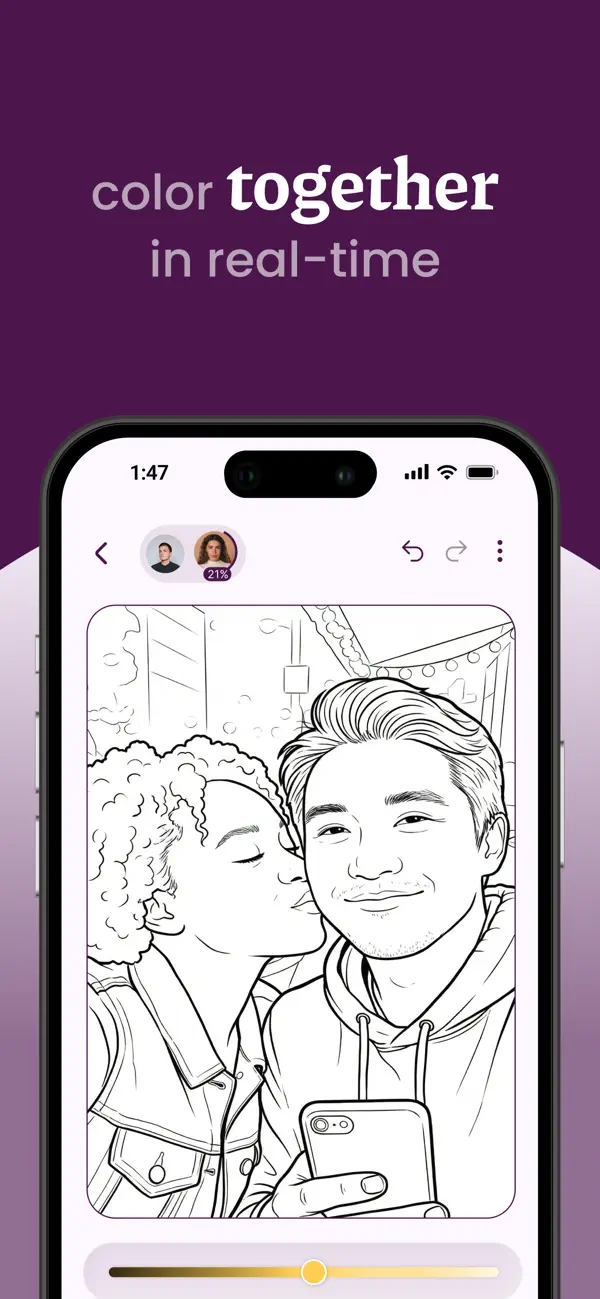
Lovla can give your next planned call a shared activity: turning one of your photographs into a coloring page together.
For iPhone and iPad. Check the App Store for current subscription details.

Make availability clear before it becomes an argument
“We will talk every night” sounds reassuring until one person starts a new shift pattern and the other has an early class. Begin with the week you actually have. Compare work, study, sleep and family commitments, including time zones.
Choose a reliable window and a backup. For example: a longer call on Sunday, a short Wednesday check in, and a message if either has to change the plan. This is an example to adapt, not a required amount of contact.
Agree on what a missed call means. “I cannot make tonight; can we do tomorrow at eight your time?” gives the other person a next step. Silence leaves them guessing.
Ask what makes each of you feel included
One person might love a voice note from the supermarket. Another might find constant updates distracting but really value a focused evening call. Neither preference automatically means that someone cares more.
Try asking: “What kind of contact helps you feel close, and what feels like pressure?” Be specific about what you can offer. Do not promise instant replies if your workday makes them impossible.
Small everyday details can help you picture each other’s lives. Send a photo of a meal, explain a running joke at work, or describe a place you keep passing. Share because you want to invite your partner in, not because either person has to prove where they are.
Give some calls a purpose beyond reporting the day
If every conversation begins with “anything new?” and ends with “not really,” try doing something alongside the talking. Cook a similar meal, work through a puzzle, or color a favorite photograph together in Lovla while using your usual call.
Pick the activity in advance and keep the setup manageable. Have the photo ready, check app access, and choose a time when neither person has to rush out halfway through.
Leave room for calls that are simply conversations too. An activity can give a quiet evening some shape, but it cannot settle a disagreement you keep avoiding.
Handle a difficult text with a little more information
Text can leave too much space around a short sentence. If a reply lands badly, ask what the person meant before building an entire argument around it. “Did you mean you need a quiet evening, or that you are upset with me?” is a clearer starting point than guessing.
Move a complicated disagreement to a call when you can both concentrate. If you need a break, say when you can return to the conversation. A pause with a return time feels different from disappearing indefinitely.
Being far apart does not make monitoring, password demands or constant location checks a reasonable substitute for trust. Keep room for privacy and for relationships with friends and family.
Talk about visits and the bigger picture separately
A visit needs practical decisions: dates, travel costs, where you will stay and who can take time off. Discuss what each person can afford before making bookings or assumptions about who travels next.
The longer term conversation is different. Do you both want to live in the same place eventually? What would have to change? You may not have an answer yet, but you can agree on when to revisit the question.
Try a monthly planning conversation so these subjects have somewhere to go. That can leave your date calls free to feel like dates instead of a permanent travel committee.
A gentle plan for the next seven days
Start small enough to learn what works. At the end of the week, ask what felt good and what felt difficult. Adjust the plan together rather than deciding one imperfect week proves anything about your future.
- Compare your schedules and pick one reliable call window.
- Agree on a short message to use when a plan changes.
- Choose one activity for a call, with the materials or photo ready.
- Put the next visit discussion on the calendar, even if booking is not possible yet.
- Keep one plan with your own friends or interests. Your life still needs room to grow.
You are allowed to ask whether this is working
Long distance can be demanding, and there is no app or routine that guarantees a relationship will last. Pay attention to whether the effort and decisions feel shared. If the same concern keeps returning, give it an honest conversation rather than covering it with another date idea.
You do not have to enjoy the distance to build something worthwhile while it lasts. Begin with a week that feels manageable, then keep making the plan together.
Make a little more time for us.
Lovla can give your next planned call a shared activity: turning one of your photographs into a coloring page together.
Written by The Lovla Team. Find current product and access details on Lovla’s App Store page.